
Downside. Edge. Upside.

I am back from Upper Bound again! Upper Bound has become one of my favourite annual trips. This year, more than 11,000 AI geeks and aspiring geeks gathered in Edmonton for a few days of talks, panels, hallway conversations, demos, and debates about where AI is going next.
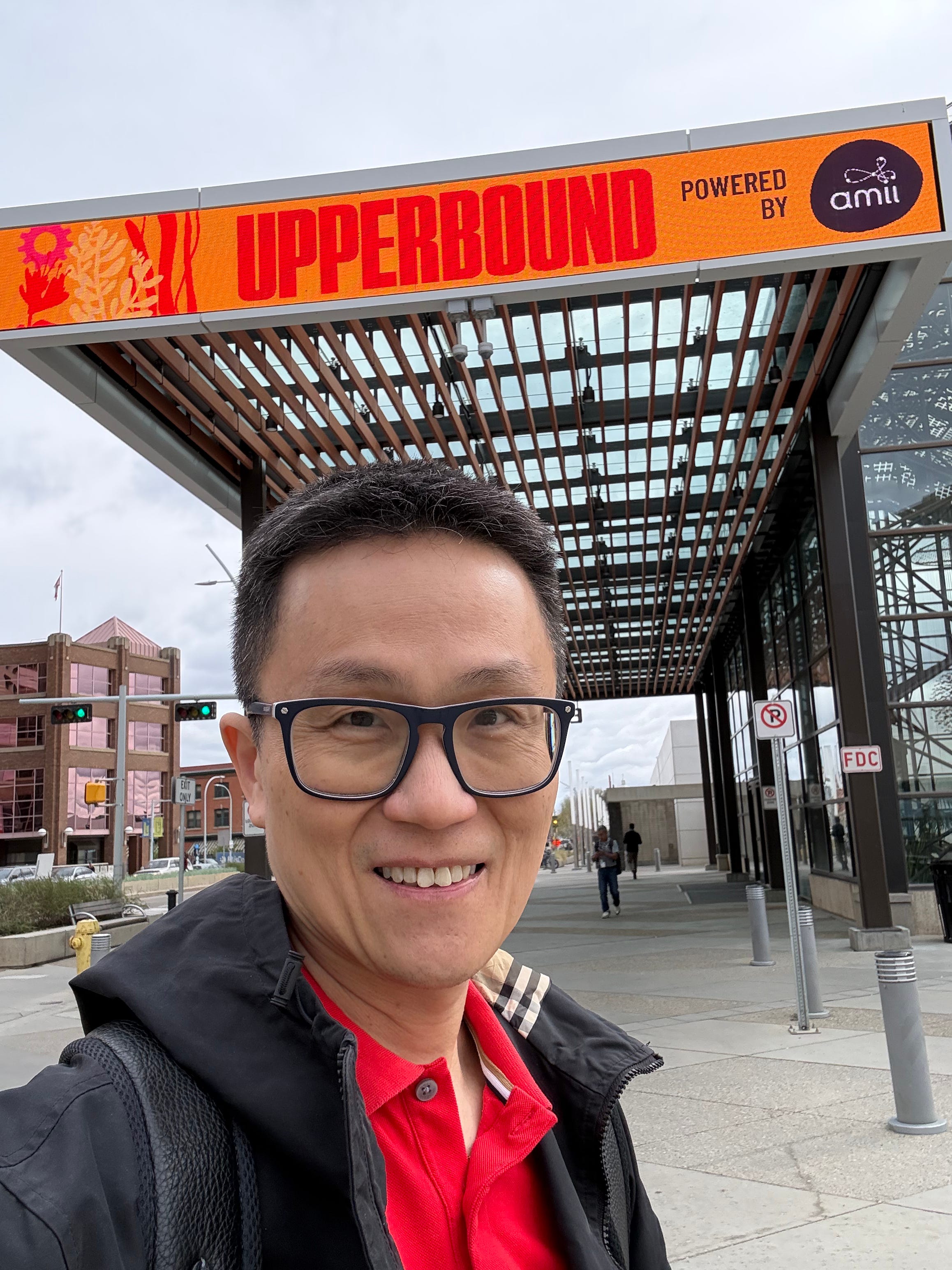
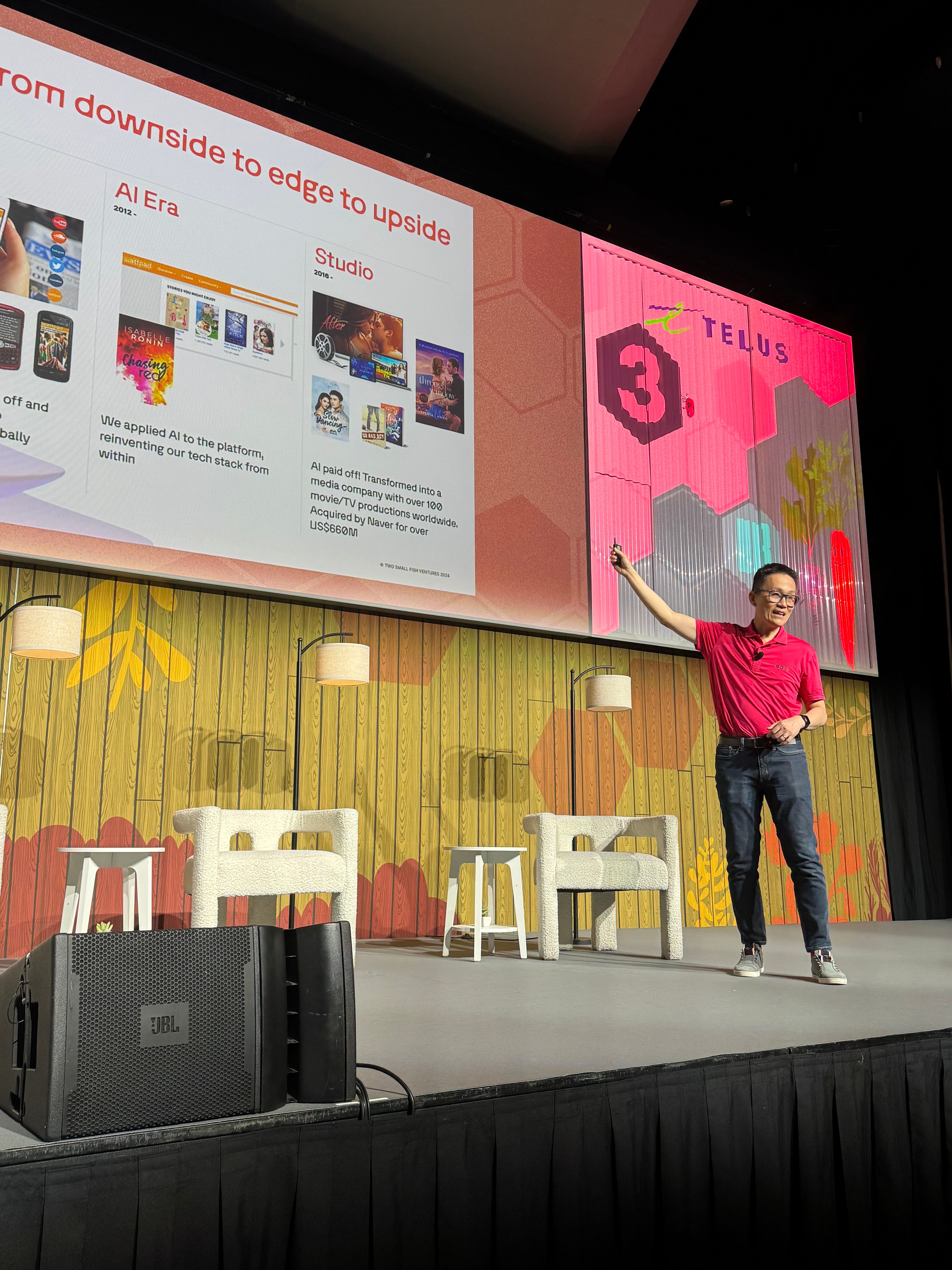
This year, my main stage keynote was a masterclass called Calculating Risk, Maximizing Upside.
Many people are perceived to be risk averse. Over the years, I have discovered that they are not really risk averse. They just do not have a good framework to help them understand how to take risk in order to achieve outsized outcomes.
Risk shows up everywhere. Should I start a company? Should I join a startup? Should I stay on the “safe” path? Should I bet my career on AI? Should I work for a big company or a small one? Should I move faster, or wait until the path is more obvious?
Underneath all these questions is the same concern: it feels risky because the outcome is uncertain.
In other words, the goal is not to avoid risk. The goal is to understand the risk you are taking and make sure the potential upside is worth the leap. That does not eliminate uncertainty, but it turns uncertainty into something you can work with.
This simple framework can be described in three pillars.
1. Set your bottom line
Not every risk is worth taking. Not every loss is acceptable.
Before emotion takes over, define the line. How much are you willing to lose? What is the downside you can survive? Where is the point where ambition turns into recklessness?
A bottom line gives you the freedom to act. Once you know the boundary, you can fight like crazy and swing for the fences.
2. Know your edge
The same risk is not the same risk for everyone.
One person may look at an opportunity and see danger. Another person may see something very different because they have technical depth, domain expertise, data, distribution, lived experience, credibility, network, or speed.
Your edge changes the risk equation.
This is especially true in deep tech. Some opportunities look irrational from the outside because the underlying technology is not yet obvious to the general public. But if you understand the technology, the product, the disruption, and the inflection point, the “crazy” bet may actually be calculated.
3. Chase the upside
If the downside is real, the upside must be extraordinary.
This is especially true for venture-backed startups. They are not built for 10 percent improvement. They are built for 100x outcomes.
In other words, small upside does not justify massive sacrifice.
This applies beyond founders too. If you are choosing a career path, joining a startup, or betting on an emerging technology, ask the same question: is the upside big enough to justify the downside?
The risk-reward profile has to be asymmetric.
This framework can be summarized into three simple points:
Downside defines the risk.
Edge improves the odds.
Upside justifies the leap.
Or even better, three simple words:
Downside. Edge. Upside.
I used numerous real-life examples, including many from my own founder journey, to show how the framework applies in practice.
The best bets are not fearless. They are bounded, advantaged, and asymmetric. That was the heart of the masterclass.
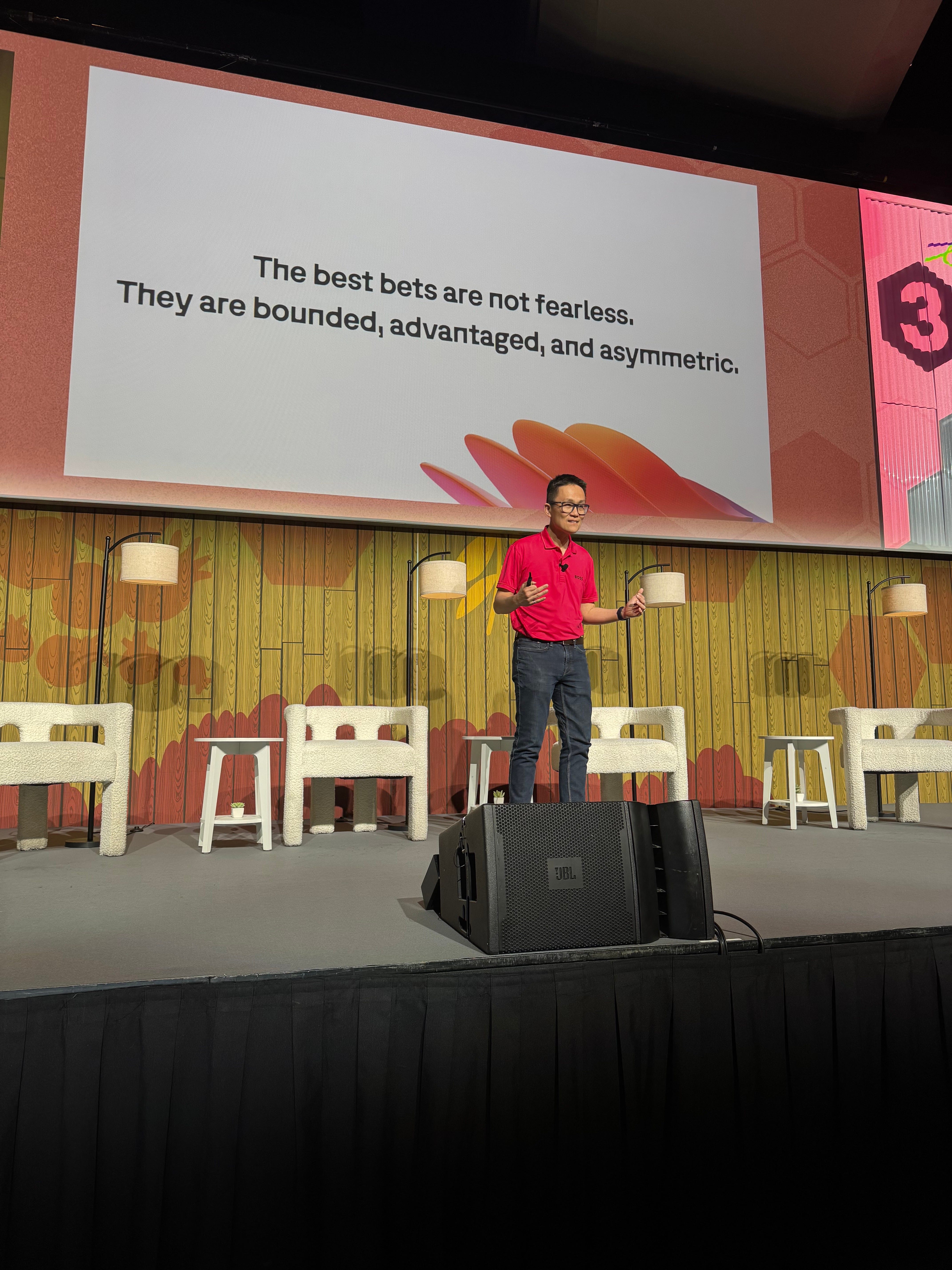
That is the difference between taking risks and taking risks thoughtfully and methodically.
P.S. I was also on the Winning with Responsible AI panel at Upper Bound. I have more thoughts on that topic, but I will save them for a separate post.
P.P.S. This talk was closely related to the framework Eva Lau discussed in her talk when she was conferred the degree of Doctor of Laws, honoris causa. This is the framework we have been using for a long time, with a lot of success.

Congratulations my friend! A well-deserved rewards.....